JAG JEANS TVC featuring FatBoy Slim's "Gangster Tripping"
From the mid 1990s to 2000, JAG JEANS, a product of
Fil-Pacific Apparel Inc., invested in advertising to level-up its image in the
crowded jeans market that included known imported brands and rising local,
quality brands.
TWO JAG MODELS MEET
It was during this period that it churned out a slew of
commercials that began turning head—from the 1996 “Merman” TVC, that won a Creative
Guild Award, to the “Senses” TVC for it female jeans line that captured a
significant number of production/technical awards (best in cinematography, art
direction) at the Philippine Advertising
Congress in 1998.
In 1999, JAG JEANS took another risk by launching a campaign
that was shot in Sydney, Australia for 9 days, using Aussie talents and a
production house. In this casually cool
commercial, the city becomes the ramp on which our JAG JEANS strut their
fashion stuff.
We follow them around, walking and posing nonchalantly on
the graffiti-lined streets, inside a
train, a male’s shower room. The music of FatBoy Slim provided the track for
this commercial with his big beat, electronic new funk rock song. “ Gangster
Tripping”.
The 30 sec. JAG JEANS had even shorter 15 sec. versions, one
of which is featured here.
CLIENTS & AGENCY CREATIVES WITH SYDNEY PRODUCTION CREW
CREDITS:
AGENCY: JIMENEZ DMB&B
Copywriter: ALEX R. CASTRO / Art Director: DON SEVILLA III
CLICQUOT CLUB was
first produced in 1881 in Massachusetts, as a sparkling cider by LaCroix Fruit
Farm. It was named “Clicquot”,after the French champagne “Veuve Clicquot”. After
The Clicquot company was formed, the apple cider was dropped, in favor of a new
drink—the Clicquot Club Ginger Ale. Other flavors followed: Cream Soda,
Strawberry, Orange, Rootbeer, Lemon & Lime, and Grape. Its “Eskimo Boy”
mascot, became one of the most recognizable brand characters in the U.S.
It was
distributed internationally in the 1950s, that led to its Philippine launch. Rafael
Yabut‘s “Tayo’y Mag-aliw” radio program, aired over DZRH, promoted the product in
a segment called “Clicquot’s Tayo’y Uminom Program”. Clicquot Club was gone by
the early 1960s; the company was
eventually bought by the Cott Beverage Corporation of Connecticut in 1969.
Last of a 4-part series of some of the most amusing,
unusual, and sometimes, weird-sounding names ever coined for real products,
that were available in the Philippines –from the 1930s to the 1960s.
REUTER’S SOAP. Brand Name For: Skin
Soap
The early toilet soap designed to beautify a woman’s
complexion is a trademark of Lanman & Kemp-Barclay & Co., Inc. The
company, itself was founded in 1808 by Robert I. Murray and its business was
conducted under the firm name Murray & Lanman in New York. The brand name--REUTER’S SOAP-- has nothing
to do with the world-famous news bureau. It was named after its creator, Dr.
John Reuter. The classic bar soap was sold in the 1950s under its Spanish brand
name, Jabon de Reuter, in the Philippines. The company still is in cooperation
today with headquarters in Westwood, New Jersey, and continues to sell the
soap.
SAKITALIS. Brand name for:
Medical plaster
Now here’s another direct-to-the-point name for a pain-soothing
medicated plaster—SAKITALIS (Aches away!).The wordsmith had an easy time with this brand name, and even though it
sounded like the aforementioned “Katialis”, it is still distinct in its
category. SAKITALIS, which contains belladonna, was “the most effective plaster
pan reliever”—in distinctive pink color! It was available in the late 1950s at
all drugstores,distributed by Colossal
Drug Store. But the coming of made in Japan Salonpas, obliterated it, and by
the 1970s, Salonpas became the dominant plaster brand, for its superior
efficacy—not to mention its catchy, classy name that has become an everyday
term fora pain relieving plaster for
all body parts.
SILENT NIGHT. A Brand Name for:
Perfume and Lotion
Yes, Virginia, there is such a perfume brand called
SILENT NIGHT, ‘ a perfume masterpiece made by Countess Maritza of New York,
U.S.A.”. It was locally distributed in local stores in 1962. But wait,there’s also a SILENT NIGHT Lotion to
complement it. Like a line from the carol, was it also tender and mild,? With a
name like that, how can you miss? As the ad suggests—“it’s best to give on
Christmas!”. One wonders if it is inappropriate to give SILENT NIGHT on other
occasions, say, like birthdays and Valentines,
TANSAN. A Brand Name for:
Mineral Water
It’s okay to drink the TANSAN!!!The crown cap revolutionized the glass bottling industry
when it was invented in 1897 by William Painter. The first drink that featured
the crimped tin cap was called TANSAN, a bottled mineral water marketed by
Clifford Wilkinson in the early 1900s. The brand name TANSAN–believed to be of
Japanese origin–has now come to mean crown caps in Filipino. The product first
came out in straight-sided bottles, and then in small, bulb-shaped green
bottles with the name in relief. In its
1920s ads, TANSAN was proclaimed as a 100% pure, sourced from “natural waters
free from all earthly deposits.” Being “radium-active,” TANSAN possesses many
medicinal qualities, proven against stomach disorders.
VIN DÉSILES. A Brand Name for: Tonic
wine
The brand name of this revitalizing drink popular in the
1950s seem anachronistic as it sound like the name of contemporary Hollywood
action star, Vin Diesel. But it was produced long before the action star of
“XXX” and “The Fast and the Furious” was born. VIN DÉSILES, a wine-based drink that claims to
restore energy and appetite, and was distributed by Oceanic Commercial, Inc. in
the Philippines. It may not have inspired the name of action star Vin Dieeel,
but it sure is power-packed like him!
JIMENEZ DMB&B's winning ad for Jag Anti-Fit, aired June 1996
Jeans ad featuring
merman makes waves
(from a PR article published in the Philippine Star and Manila
Bulletin, Sep. 1996)
The new JAG Anti-Fit commercial is making waves, literally,
with its focus on a mythological sea creature. Titled “Merman”, the ad is
catching the fancy of viewers. It features a man shown swimming with a
fishtail, then removing it afterwards to put on a pair of JAG Anti-Fit Jeans.
Using a merman as model for denim jeans is indeed a fresh
idea,
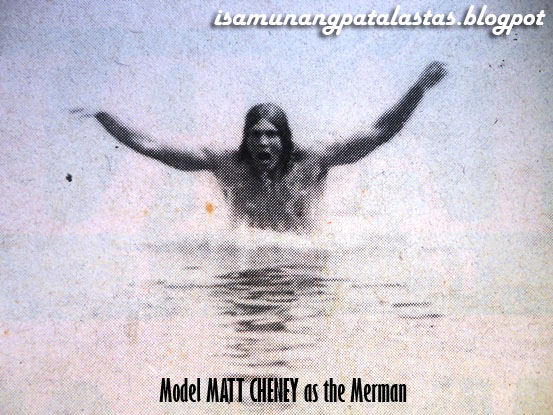
Australian model MATT CHENEY, a competitive swimmer, and did all the swimming scenes in the ad.
“We had to think Anti-Fit. I think this is synonymous to
being rugged, daring, comfortable and even controversial”, says Jun Reyes, the
commercial’s director.
“When we say jeans, it usually refers to tight-fitting
denims, so the idea behind the commercial is to show how we can feel
comfortable with jeans”, adds Alex Castro, who collaborated with Reyes on the
JAG ad. “ We fitted a man with the tail of a fish to show how constricting
denims can be. It shows the limitation of movement. It is not relaxed, not
comfortable. Then we show JAG breaks out of the denim stereotype”.
WATCH JAG ANTI-FIT "MERMAN" TVC HERE:
Source: JAGJeansPh
To make the commercial work, the team relied on realistic
props and materials. Says Reyes, “it took hours to put the fish tail on the
model. He had to wake up at 4 a.m. for the make-up artist to work on him. We
really made sure that the tail would appear as though it was a part of him. We
used prosthetics so that the tail would look real. And the tail was detailed
for the model so that it would not make him uncomfortable. We had a another
tail on reserve in case it got damage. The model had to be carried by 4 men to
the beach.
JAG ANTI-FIT "MERMAN' TVC SHOOTING IN BOLINAO, PANGASINAN
Choosing the ideal site for the commercial was also crucial.
The shoot was shot in 2 locations: Anilao, Batangas for the underwater scenes,
and Bolinao, Panagsinan for the beach scenes.
Reyes and Castro said the commercial was easy to do. They
shot the underwater scene for a day, and the scenes above the water overnight.
Since models count a lot in the success of a commercial, JAG
made sure they had a perfect merman in its ad. “We had to look for a model who
is rugged and suave at the same time. These qualities we found in Matt Cheney,
who is a swimmers and a model from Australia. He was paired with Carol Dunbar
to add appeal to the commercial. Together, they epitomize the image of JAG—young,
spirited, adventurous”, Reyes explains.
The prosthetic fish tail was molded on the model's body
Mythological creatures, gorgeous bods, and a cool concept.
With all these elements combined, the JAG Anti-Fit commercial is already making
a big splash on TV screens.
NOTE: JAG ANTI-FIT ‘MERMAN’
TVC was adjudged by the Creative Guild of the Philippines for the month of
September 1996.
CREDITS:
AGENCY: JIMENEZ DMB&B
Copywriter: ALEX R. CASTRO / Art Director: NIKKO CORNELIO
Producer: PAUL SUAREZ / Account: ANNA DOMINGO
PRODUCTION HOUSE: UNITEL
Director: JUN REYES
D.O.P. BOY YÑIGUEZ, LEE BRIONES / Editor: IKE VENERACION
Production Design: TOMMY NG / Executive Producer: Deet Castillo
The Creative Guild of the Philippines, an association of
creative personnel working in the advertising industry, was just 3 years old
when the 1987 Creative Guild Ad of the Year Awards night at the refurbished
Metropolitan Theater was staged. One of the frontrunners for the Ad of the Year
was DEL MONTE SPAGHETTI SAUCE’s “Godfather”, a much-talked about TV ad produced
by McCann Erickson for Del Monte Phils.
WATCH THE DEL MONTE SPAGHETTI SAUCE 'Godfather" TVC HERE:
To drive home the “Italian-ness” of the product, the agency
made use of the iconic Don Vito Corleone, a fictional character in Mario Puzo’s
“The Godfather”, ably essayed in the 1972 film by Marlon Brando. McCann caster
Amy Salona found a talent in the person of Enrique “Ricky” Rivero, an
occasional stage actor, who, when fully-made up, became Brando’s
doppelganger—right down to his raspy voice.
TV viewers took notice of this well-produced, imported
looking commercial, what wit its authentic production design,moody lighting, the supporting characters,
and most especially, the uncanny duplication of the “Godfather’s” look and the cast's superb acting. It was no wonder then that the Del Monte commercial was chosen as the TV ad of the month for August 1987, by a jury consisting of
agency art directors, creative directors, copywriters and producers.
In the grand awards night, however, Nestle’s MILO “Gymnast”,
headlined by SEA games gold medalist Bea Lucero,edged out the DEL MONTE’s “Godfather”, for
the plum TV Ad of the Year prize. But Enrique Rivera’s portrayal ofthe “Godfather” was so unforgettable that he washonored as one of the 10 Best
Commercial Models of the Year. He was cited for his ‘effective portrayal of a
distinctive character in the most natural and realistic manner, through
skillful acting that captures the drama between product and consumer'.
DEL MONTE'’s “Godfather”
would win more technical awards at the next Philippine Advertising Congress,
but the best was yet to come. In 1990, the same Del Monte brand will win top honors
at the Creative Guild TV Ad of the Year for
the commercial “Novices”, the most prized award for the evening. For McCann
Erickson, the feeling was just—magnifico!
The 1990 Ad of the year reeks of foreign (specifically
Italian) flavor, but was actually a locally-written, locally-produced effort
full of recognizably Pinoy values and pushing a product that is an apparent
bestseller among Filipino housewives.
“Novices” was a 45-sec. TV ad created by McCann-Erickson for
Del Monte Philippines’ unadulterated spaghetti sauce, touted as having the most
authentic Italian flavor because of its generous serving of herbs and spices.
“Del Monte had been a McCann client “forever”, recalls
president Emily Abrera, who was both writer and creative directors for the ad.
“When I joined the agency 17 years ago, they were already here.”McCann had already launched the product a couple of years
earlier with a hugely successful spoof entitled “Godfather” featuring a Vito
Corleone/Marlon Brando deadringer an won raves for the ad’s production values,
“Clients wanted something just as good,”Abrera says, “and the
idea was still to do something sort of Italian,” to again underscore the
product’s authentic flavor.”
A commercial full of nuns was not the first storyboard
approved for productions; the original idea was to stage a raucous family
gathering in the true Italian tradition.
“My father is Italian”, Abrera asserts,”so there was
certainly a lot of noise in my family!”. Everybody thought that the nuns would
be more unusual, however, and then account manager Rosanna Henares went as far
as consulting real-life sisters about the idea.
WATCH DEL MONTE SPAGHETTI SAUCE "Novice" TVC Here:
Uploaded by Kape WithCream
The images were ideal; the conventsetting, with its cast of hard-working,
industrious residents, stressed the points of ready-made product that tasted as
heavenly as the traditionally-prepared favorite. (“Two hours, mother!”, one of
the novices exclaims), and the Mother Superior, sublimely played by stage
actress Benita Steiger (the production had to wait until Steiger returned from
a London vacation), was the epitome of domestic authority whipping up meals
with divine mandate. “Remember, it’s a Christian country,: Abrera says of the
Philippines, ‘and nuns are always taught never to take credit.”
As the possibility of offending the religious sensibilities
of viewers, Abrera changed the final line from”Praise the lord”, to “Praise
Him”, which Steiger delivers with upturned, knowing eyes in response to the
novice’s compliment, “Praise you
Mother.”
BENITA STEIGGER, with Repertory Phils. Actors
The end copy, “Preferred by mother” is the ideal
double-entendre endorsementfrom both
the domestic and religious sectors. “There was definitely a chuckle factor, but
we didn’t want to make fun of anybody,”Abrera says. It was certainly more charm
than humor.
The ad was shot in 3 days in te arched ruins of an abandoned Manila bank building that looked appropriately solemn with proper lighting and
set design. Once again, casting proved critical. “We wanted young girls who
looked absolutely virginal,” Abrera says, “and this was one of those cases
where, if you didn’t have the right faces, the ad wouldn’t work, even if you
had a good idea.”
The youngest talent was 12 years old, and the carefree
lasses were not above lifting their heavy cheesecloth costumes between takes to
air their sweating legs. Smoke, camera filters, Joey Luna’s ethereal;
production design on a low budget, and Butch Perez’s inspired direction
contributed to the making of a polished, truly different commercial with an
underlying Filipino sensibility.
“Oh, but we have a lot of common with the Italians, don’t
you think?”, Abrera asks, Enoighto proper; Del Monte Spaghetti Sauce to the top
of its market.
CREDITS:
AGENCY: McCann-Erickson / ADVERTISER: Del Monte Philippines
PRODUCT: Del Monte Spaghetti Sauce
CREATIVE DIRECTOR/ COPYWRITER: Emily Abrera
ART DIRECTOR; Ding Villamor / PRODUCER: Baby Enriquez
DIRECTOR: Butch Perez
CINEMATOGRAPHER: Rody Lacap / EDITOR: Billy de Leon
PRODUCTION DESIGNER: Joey Luna
PRODUCTION HOUSE: Electromedia
REFERENCES:
Article lifted from: PERFECT 10: A Decade of Creativity in Philippine Advertising,
edited by Butch Uy, p.54
Another set of the strangest, most hilarious and unusual barnd names of products that were available in the Philippines from the 50s and 60s.
***************
LUTO (1951).Brand Name for:
Laundry soap
Philippine Manufacturing Company (PMC), founded in 1908, forayed
into vegetable shortening production in 1917, and launched Purico to great
success in 1919. It was made from palm oil, and sold in solid blocks, packed in
cartons. When Procter & Gamble U.S.A. purchased PMC in 1935, the product
portfolio expanded to include detergents.
In 1951, the laundry soap LUTO came into
the market. It had a rather strange name—LUTO—or “cook”. It also came in white
blocks, which reminded people of Purico. Actually LUTO was derived from the
process of making soaps, in which coconut or palm oil with lye is cooked to
form a detergent soap, that is then molded into bars. Thus, “Mag LUTO na tayo!” doesn’t just
mean,”let’s cook”, but also let’s do the laundry!”, at least in the early 50s!
MONG ALING (1934). Brand Name for:
Remedy for anemia
This medicine intended for a serious disease has such a
musical-sounding name, that it’s hard to believe it can bring relief to anemic
women and mothers with disorders associated with pregnancy and their menses.
Even the ingredients do not give a clue as why it was named MONG ALING. To make it more difficult to decipher, the word and
numbers “Silang Lab. No. 8368”, are
appended to the brand name. One can just imagine if someone wrote a jingle for MONG ALING. It will probably go
“Mong-aling-aling-ding-dong!”
Brand names may sometimes sound alike, but these two
midcentury anti-perspirant products have uncannily similarity and only a letter
separates them: ODORODO and ODORONO.
The older one, ODORODO, is a palindrome—it reads the same way when
read backwards. Such literary devices were used to increase memorability of the
brand name, but unfortunately Odorodo, even with its catchy name and unique
Action-Proof formula, did not catch on. But at least, the euphemistic “B.O.”
(for body odor) as headlined in this 1956 ad, is still in our vocabulary today. On the other hand, ODORONO is a cream deodorant which came out in 1961. In today’s
stringent trademark rules, imitating the distinctive, perceptual features of a
leader brand, such as its brand name is a violation.
OJOKOL (1950s).Brand Name for:
Eye Remedy Solution
Say that again? Say this brand name wrong, and it will
sound like a slang for self-erotic gratification. Time was when medicine brands
had Spanish names, a way of branding
still in practice in the 1920s—when OJOKOL
was formulated by Botica Boie. The eye solution was meant to give cool
relief to sore, irritated eyes (OJO means “eye” in Spanish, pronounced as “oho”),
and as for the suffix, it’s one of those add-ons used by chemicals like
alcohol, glycol, ethanol. So next time
you say OJOKOL, make sure you pronounced
it the way Spaniards do—not with the hard “j” we are accustomed to.
PALIKERO (1930s). Brand Name for:
Pomade.
Playboys and dandies would surely go for this pomade brand
called “PALIKERO”, that was produced in the mid 1930s. And it even had the
audacity to use on its paper label
(unauthorized, for sure) the picture of
a Hollywood icon who was known for his “palikero” roles on screen—Rudolph
Valentino. Whether this pomade lived up to its name is a big question mark, as
nobody seems to know this brand, or what happened to it.